
In our office there is a small receipt printer. Whenever a support ticket arrives in Zoho Desk, it prints a slip. Not a receipt for coffee, but a ticket on paper: something has been reported and someone needs to look at it.
Internally we call it the BrONsprinter, a play on Bronscode and the Dutch word for a receipt printer. The name stuck, and we have no plans to change it.
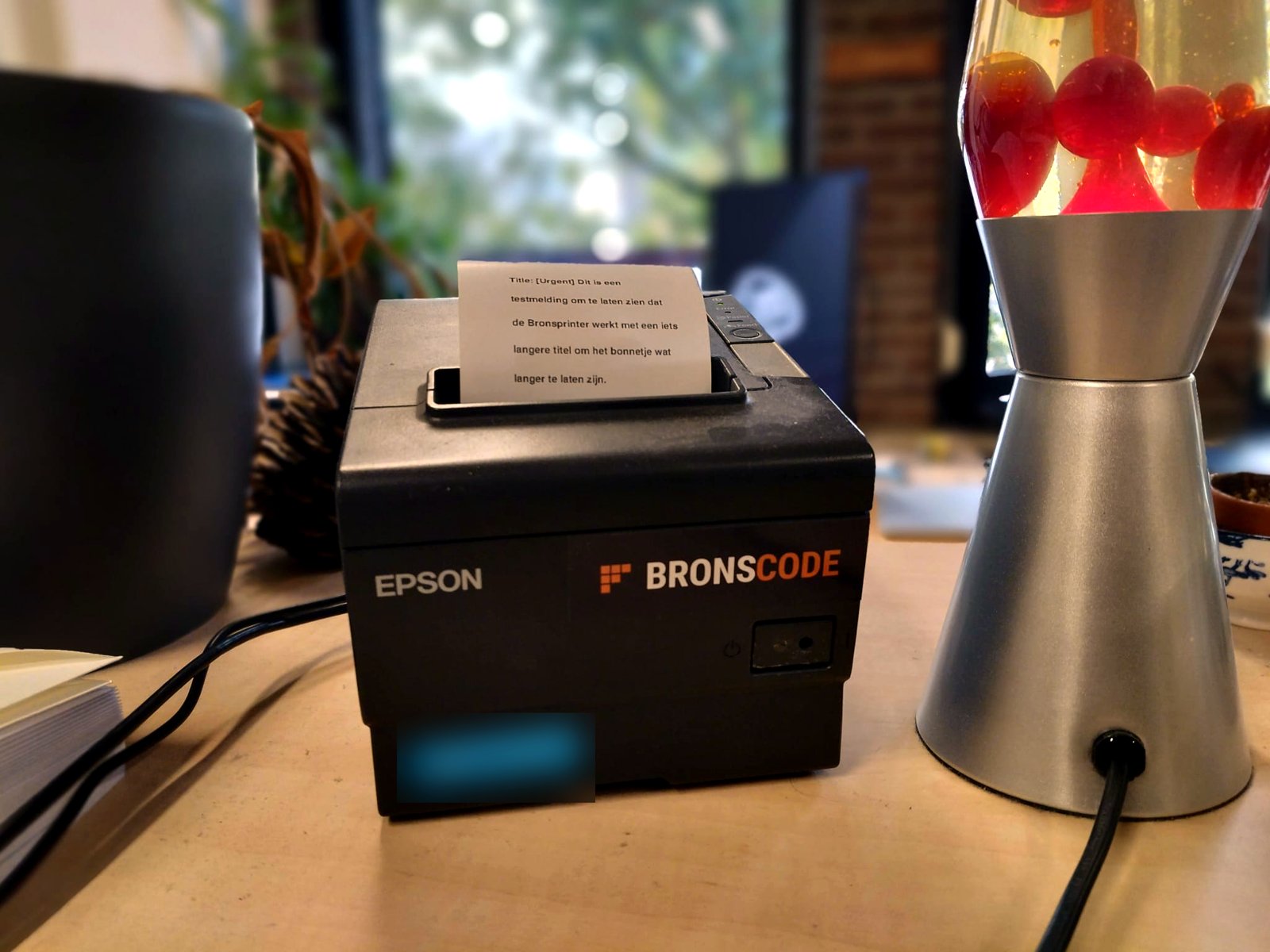
A slip you hand over.
The slip is meant to be worked with. We pin it up and hand it to someone in the office who will pick it up. Whoever holds a slip knows: this one is mine now.
In practice: the digital ticket stays the system of record; the slip makes it visible who has what.
The digital ticket in Zoho Desk remains the system where we respond, record decisions and close tickets. The slip is the physical side: what is going on and who has it is visible at a glance.
Deliberately outside the scrum board.
Our development work follows the usual agile/scrum approach. Incidents don't belong there. An incident rises above the sprint: it has to happen now, not when it reaches the top of a backlog. So we don't drag issues across a digital board either.
A paper slip is a simple answer. It is:
- independent of sprint planning
- immediately visible
- free of any login or filter
You walk past and see that something is going on.
The board where we classify
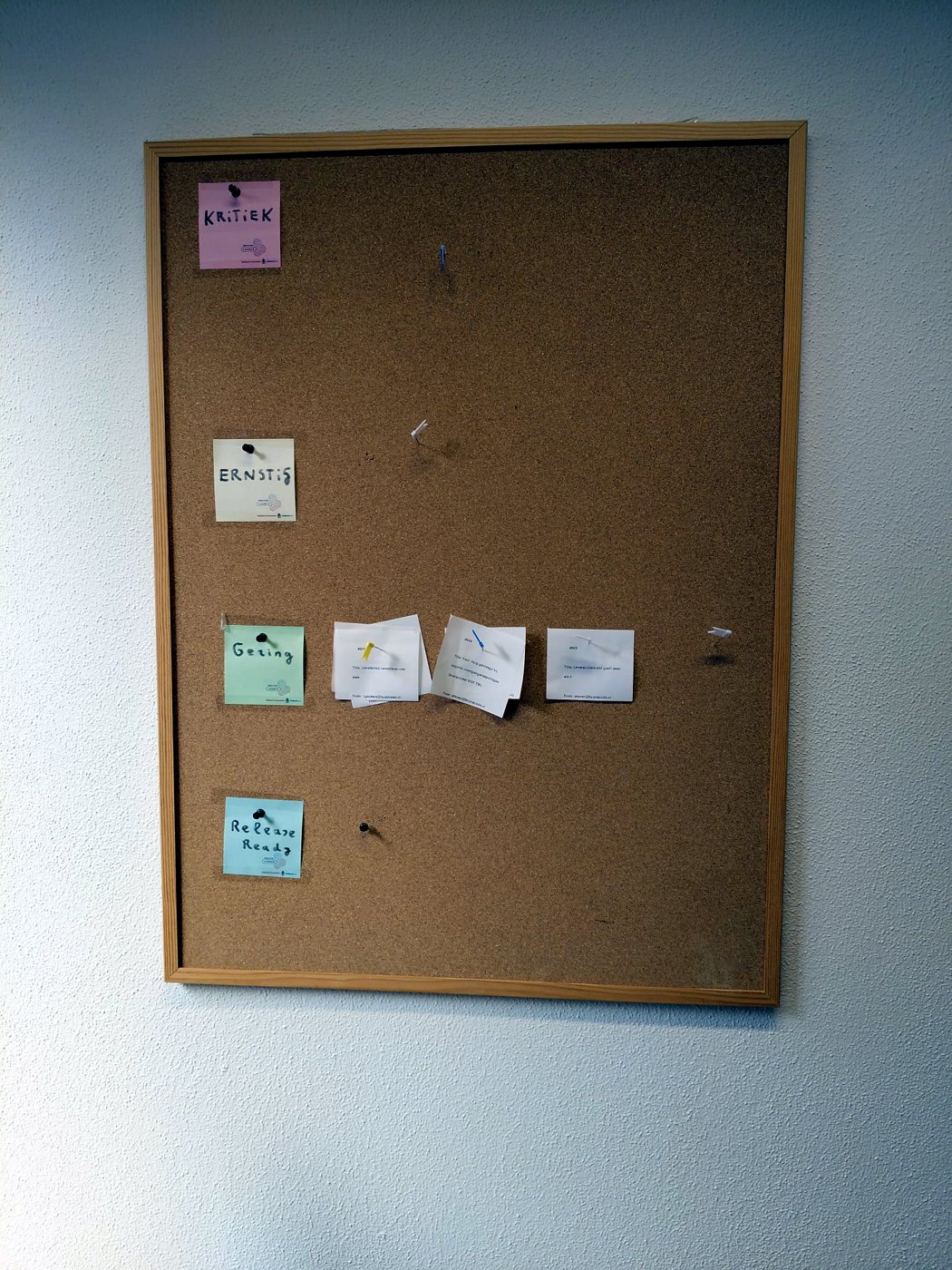
The board in our office shows the levels from our incident management: Critical, Severe and Small, plus a column for what is ready for release. When we classify a ticket, we pin the slip beside the right level. That makes the severity visible to everyone walking by, and lets you ask without searching: "Who is picking this up?"
Why we do it this way.
A report must not disappear silently into a queue. In a small team shared awareness matters, and a slip grabs attention in the office faster than one more line in a list. It costs almost nothing and keeps things from lying around.
Sometimes information security isn't about making something bigger, but about hanging it right in front of you.